
An innovative treatment driven by Sant Joan de Déu improves neurodevelopment in two children with Menkes disease
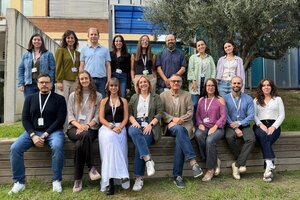
An international team led by Dr. Francesc Palau, Distinguished SJD Researcher and head of the Neurogenetics and Molecular Medicine research group at the Institut de Recerca Sant Joan de Déu (IRSJD) and principal investigator in the area of rare diseases at CIBER (CIBERER), has published the article Elesclomol-copper therapy improves neurodevelopment in two children with Menkes disease en The Journal of Clinical Investigation, with the first clinical results showing that therapy with elesclomol-copper (ES-Cu) can improve neurodevelopment in children with Menkes disease, which currently has no approved treatment.
Menkes Syndrome
Tomorrow, November 29, marks Menkes Syndrome Awareness Day, a rare genetic disease caused by mutations in the ATP7A gene, which controls copper transport in the body. It is an X-linked hereditary disorder, so it mainly affects boys. Affected individuals have a poor prognosis, with clear deterioration after the age of three.
People with Menkes cannot properly distribute copper, an essential element for the functioning of various enzymes, which causes problems in brain development, alterations in connective tissue formation, nervous system involvement, muscle weakness, and growth problems, among other manifestations.
The study describes the therapeutic response of two patients diagnosed in the first days of life thanks to family history. Both had mutations in the ATP7A gene, which prevent proper copper transport in the body and cause progressive neurological deterioration. Until now, treatments based on copper-histidine had shown limited efficacy and were highly dependent on early diagnosis and residual activity of the ATP7A protein.
Elesclomol-copper therapy
Elesclomol is a small, lipophilic molecule capable of easily entering cells. When it binds to copper (Cu²⁺), it forms a stable complex called ES-Cu. In Menkes disease, the ATP7A protein does not function correctly and prevents copper from reaching the organs that need it-especially the nervous system-causing a severe deficit of this essential function.
ES-Cu therapy allows copper to be transported more efficiently into cells, crossing membranes more easily and reaching tissues where conventional treatments have limited efficacy. This way, it facilitates copper incorporation into enzymes that depend on it so they can perform their biological functions.
Clear improvements in cognitive, language, and motor development
Under an exceptional use protocol approved by the Spanish Agency of Medicines and Medical Devices and coordinated with the Menkes International Association, the children received ES-Cu as a weekly subcutaneous injection, with progressively adjusted doses. The treatment was combined with copper-histidine, regulating its administration to avoid excess copper.
Neurobehavioral assessments, carried out periodically using the Bayley-III scale, showed:
- Significant improvements in all developmental areas in the older patient (NP#1), who went from below the 5th percentile to values within normal range in cognitive, expressive language, and fine motor areas.
- Proper maintenance of development in the younger patient (NP#2), who did not show the usual regressions associated with the disease.
- Additional benefit when treatment is started very early, indicating the importance of immediate intervention.
First evidence that the treatment crosses the blood-brain barrier
In addition to neurobehavioral improvement, the team observed:
- Positive changes in hair structure, a characteristic affected in Menkes disease.
- Stable levels of copper and ceruloplasmin in blood.
- Detection of copper in cerebrospinal fluid, suggesting that ES-Cu may facilitate copper delivery to the brain, a key aspect to halt neurological damage.
Despite these advances, some symptoms related to connective tissue-such as lung problems or vascular tortuosity-persisted, indicating that copper distribution in different tissues will need further optimization.
A decisive step toward the first clinical trial
The results represent the first clinical evidence that ES-Cu therapy is safe and potentially effective in children with Menkes disease. According to the authors, these data lay the foundation for launching the first formal clinical trial with a larger number of patients, aiming to evaluate its safety, optimal dosage, and long-term efficacy.
"Now it is necessary to validate these results in a broader clinical trial that allows us to establish the best dose, the best therapeutic strategy, and understand how far we can go with this treatment," says Dr. Francesc Palau.
The study was made possible thanks to collaboration between clinical and research teams from IRSJD, HSJD CIBERER, Hospital Materno-Infantil del H.U.R. de Málaga, Hospital Universitario de León, and international reference centers, and is supported by the Menkes International Association, the Fundación Amigos de Nono, the Fundación Ramón Areces, the Agencia Española de Investigación, and several projects funded by the U.S. National Institutes of Health (NIH).
The results represent the first clinical evidence that ES-Cu therapy is safe and potentially effective in children with Menkes disease.